

When Life Gives You Lemons
. . . juice it or lose it!
What kind of tree to grow? Take your pick:
-
Eureka Lemon Tree - Bright yellow, rough skin, characteristic nipple. High juice content, highly acidic. Not fond of cold.
-
Lisbon Lemon Tree - Can grow very large, dense, thorny foliage, smooth skin, cold tolerant.
-
Meyer Lemon Tree - lemon/orange hybrid, less acidic, tolerates cold, big fruit, small tree can be grow in pots.
Nutrition:
-
High in Vitamin C; Vitamin C strengthens your immune system, assists with iron absorption and supports healthy skin. Anemia? Eat a high C fruit or vegetable with protein to boost iron absorption.
Food Banks
-
If you are unable to use all your lemons or citrus fruit and do not want them going to waste, reach out to your local food banks.
Freezer Lemons
-
If your fruit is in danger of being damaged by a cold snap, pick as many as you can store and throw them in the freezer! When ready to use, defrost and squeeze out the juice. The fruit will be mushy but you can still use the lemon juice. Fresh lemon juice can be frozen in ice cube trays, bagged and stored in the freezer. Each cube is about 2 tablespoons or 1 ounce

An easy way to can lemon juice:
-
20-24 lemons
-
8, 1/2 pint jars with lids and rings
Instructions
-
Have jars prepared. Wash lemons and cut into pieces.
-
Extract juice and strain if necessary to remove pulp and seeds.
-
Pour into large pot with water and bring to a boil.
-
Fill jars within 1/4 inch of top. Seal. Process in a water bath for 5 minutes.
-
Remove from water and allow to cool. Listen for the “ping” to insure jars have sealed.
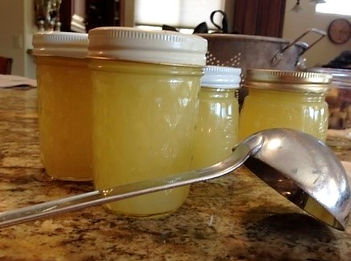
Canning Lemon Juice
Juicing equipment: Manual press or electric. If electric equipment produces too much pulp, strain juice before heating. This is our Wear Ever aluminum juice press. Love it! It is vintage and you can fine new ones online. We have found this to be the easiest to use and clean. Once you get your rhythm down, things will go goes fast.
Lemon juice is an acidic food and only requires a water bath method to process. It is a good product to preserve if you are a beginning home canner. The longer lemon juice is processed, the darker the product. It will also darken with age.

Lemon Press
Canning juice in half pint jars (1 cup) is a good quantity for most recipes. Adjust for personal needs.
No matter what size jar you use, you will use a water bath method of canning. If you are new to canning, you must learn the basics of food safety before attempting to can any food item.
Make sure your boiling water covers the top of your jar by at least one inch during processing.
Lemon Vinegar
Pack lemon pieces that have been squeezed into a quart jar and top off with white vinegar. Allow to “cure” for a few weeks and use as a lemon vinegar in recipes or cleaning products.
Candied Lemon Peel
This is a wonderful way to use those leftover peels and make a sweet treat. If I am planning on using the rind after canning, I peel the lemons first. Meyer lemons are very easy to peel by hand.
-
2 cups (more or less) of lemon peel,, cut into 1/4 inch strips
-
2 cups white sugar
-
2 cups water
-
Ultra fine sugar to dust lemon peel after drying (This is a bar product used in alcoholic drinks but regular white sugar will do in a pinch.)

Instructions
-
Parboil peel for 5 minutes and drain.
-
Combine sugar and water to make simple syrup and bring to a boil.
-
Add lemon peel and allow to simmer at a low temperature for 1 hour.
Peel is done when it is easy to bite into and has a translucent color.
-
Drain, cool to touch and drape strips over cooling rack. Allow to dry over night.
-
In the morning, dust with sugar and store in tightly closed jar.
Lemon Zest
Another great way to use the peel. This is a tool, sometimes called a citrus zester, is designed for making tendrils of peel to use for zest. You can also use a grater.
Instructions
-
Allow rind to dry on a large plate for a couple of days until rind is dry and no longer sticky.
-
Store in air tight container and use in any recipe calling for zest or experiment and add it to your cooking.
Notice the orange color on the rind of these Meyer lemons. A perfectionist would use a Eureka or Lisbon lemon for this recipe to obtain a genuine yellow color.


Lemon Ice (Granita)

Refreshing and light, Lemon Ice is a perfect, fat free substitute for ice cream on a hot summer day. If you choose to freeze your lemon ice in an ice cream maker, know that it will not freeze completely and the slushy mixture must be transferred to a freezer for finishing.
Recipe:
-
2 cups water
-
2 cups sugar
-
2 tablespoons lemon zest
-
1 1/2 cups fresh lemon juice
Instructions:
-
Combine sugar and water and simmer until sugar is dissolved, about 5 minutes.
-
Stir in juice and zest.
-
Pre-cool in refrigerator and when cold, pour into shallow pan or ice cream maker. Ice must be stirred at least every 30 minutes to make sure the ice crystals form correctly.
-
When product becomes a thick slush, it can be transferred to a container with a lid and placed into freezer to finish hardening.
Makes 4-5 servings.
Limoncello
Doesn’t this just scream sunshine? Limoncello is a lemony Italian liqueur. It is easy to make but requires some patience as you must wait a couple of weeks to “age” the product.
There is a lot of discussion on the proper methodology to prepare this drink. Below is a list of some of the on-going debates:
-
Ageing- anywhere from 48 hours to 60 days
-
Decrease the sugar; increase the sugar; get rid of the sugar and use honey
-
Use Everclear or 100 proof vodka
-
Some recipes are available for creamy limoncello and include milk as an ingredient
-
My advice... experiment and enjoy the journey!

Recipe:
-
Peelings from 15-20 lemons, must be organic or alcohol will leach pesticides into your limoncello! Use the lemon juice for other recipes.
-
A large glass container with lid
-
750 ml of Everclear or 100 proof vodka
-
3 1/2 cups sugar
-
3 cups water
Preparation
Step 1:
Peel lemons making sure to avoid the white pith on the inside of the peel. The white pith will make your limoncello bitter with an unpleasant after-taste. The pith can be scraped off with a knife, if needed. Combine lemon peel and alcohol in the glass container. Cover and store in a cool place for 2weeks. Almost immediately the alcohol takes on a warm, yellow color.
Step 2: Strain the lemon peel from the liquid and set aside. In a medium size pot, combine sugar and water and bring to a boil. When sugar crystals are dissolved, remove from heat and allow to cool. Add syrup to liqueur and stir. Bottle and store in freezer. Limoncello will not freeze. Makes approximately 3, 750 ml bottles (Depending on how much tasting you do)
Lemon Syrup for Lemonade
All those lemons you grew last winter can be turned into lemon syrup to make refreshing lemonade all summer long. You are making a light lemon syrup that will be diluted with water when your ready to make a pitcher of lemonade. Make sure to only make what you can use in 6 months as it will darken with time.
Recipe:
-
Prepare as many half pint jars as determined by your volume of lemon juice. For this recipe you will need 6 jars. Wash jars in hot, soapy water. Rinse and place in a canning pot.
-
Heat water with the jars and lids to sterilizie the jars and lids. Hold just below boiling. Canning kettles should have a removeable plate to keep the jars off the bottom of the pot when they are boiling.
-
3 cups lemon juice
-
3 cups sugar
Preparation
-
Combine juice and sugar in a medium size pot. Heat until the sugar is dissolved. Keep hot.
-
Remove one hot jar at a time from the kettle. Fill to within ¼ inch of the top.
-
Wipe rim with a clean dry cloth. Seal with a lid and band.
-
When all the jars are filled, return to the kettle. Turn up heat and bring to a boil. Canning time will depend on your elevation (it’s a pressure thing) and it’s easy to look up online
(In Phoenix, it’s only 5 minutes after you reach a full boil. Turn off heat and remove jars to a clean, dry cloth placed on the counter and allow to cool. Listen for the “ping” and test the seal before storing.)
-
Remove bands before storing. When you’re ready for lemonade, add water to desired dilution. Top with fresh lemon slices or fresh mint sprigs.
Follow me on: